Buy redfile.eu ?
We are moving the project
redfile.eu .
Are you interested in purchasing the domain
redfile.eu ?
domain@kv-gmbh.de · 0541-91531010
Buy redfile.eu ?
What is the correct conjugation?
The correct conjugation of a verb depends on the subject of the sentence and the tense being used. In English, regular verbs typically follow a pattern of adding -ed to form the past tense (e.g., walk becomes walked). Irregular verbs, on the other hand, have unique conjugations that do not follow a set pattern (e.g., go becomes went). It is important to pay attention to the subject of the sentence and the tense being used in order to correctly conjugate a verb. **
What is conjugation in German?
Conjugation in German refers to the process of changing the form of a verb to match the subject of the sentence. This means that the verb will have different endings depending on whether the subject is "I," "you," "he/she/it," "we," or "they." Conjugation is an important aspect of German grammar as it helps to indicate who is performing the action in a sentence. It is essential for learners of German to understand how to conjugate verbs in order to communicate effectively in the language. **

Similar search terms for Conjugation
Top-Angebote
Products related to Conjugation:
-
GDFStudio - Benjamin Metal Folding Storage Cabinet with Secure Locking Doors and Flexible OrganizationSecure Locking Doors: Designed with robust handle locks, this cabinet offers enhanced security to protect valuable documents, tools, or supplies in offices, schools, or garages while remaining easy to operate.211,90 $*Shipping: 0,00 $Secure redirect to the provider
-
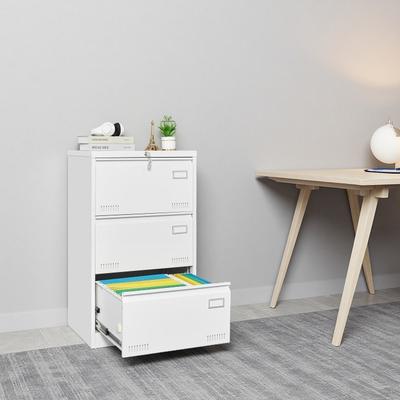
VIVIADORE Drawer Lateral Filing Cabinet with Lock,Wide Metal Storage Cabinet with Secure DrawersOptimize your workspace organization with this widened drawer file cabinet, designed to provide efficient storage, easy file management, and enhanced document security.263,50 $*Shipping: 0,00 $Secure redirect to the provider
-
OEM Wood File Cabinet, Tall Filing Storage Printer Stand for A4/Letter/Legal Size, Home Office Document Accent CabinetA reliable file cabinet is the backbone of an organized workspace—where documents find their place, clutter fades away, and work flows with ease.238,49 $*Shipping: 0,00 $Secure redirect to the provider
-
KOWO Wooden 2-Drawer Filing Cabinet with Lock Letter Size Office Storage, Locking Document Organizer for Home or WorkplaceAre you always troubled with not being able to find documents and materials and the mess of piles of folders? Do you often need help finding what you want? It's time to have a file cabinet!123,19 $*Shipping: 0,00 $Secure redirect to the provider


-
What conjugation does "dare" have?
"Dare" is a regular verb in Italian and belongs to the second conjugation. In the present tense, it is conjugated as follows: io do, tu dai, lui/lei dà, noi diamo, voi date, loro danno. **
-
How do I distinguish between the verbs of the E-conjugation and the consonant conjugation?
In Old Norse, the E-conjugation verbs typically end in -a in the infinitive form, while the consonant conjugation verbs end in -a, -i, or -u. Additionally, the E-conjugation verbs have a stem vowel that changes between the present and past tense, while the consonant conjugation verbs have a stem vowel that remains the same. It is also important to note that there are irregular verbs in both conjugations that do not follow these patterns. Therefore, it is important to study and memorize the specific conjugation patterns for each verb. **
-
What does the consonantal conjugation mean?
Consonantal conjugation is a grammatical feature found in Semitic languages, where the root of a verb consists of consonants only, and the vowels are added to indicate different tenses, moods, and aspects. This type of conjugation is characterized by changes in the vowels within the root consonants to convey different meanings. Consonantal conjugation allows for a high degree of flexibility and complexity in verb forms, making it a key feature of Semitic language grammar. **
-
What is the conjugation in German?
Conjugation in German refers to changing the form of a verb to match the subject of a sentence. This means adjusting the verb's ending based on the person (I, you, he/she/it, we, you all, they) and tense (present, past, future). German verbs can have different conjugations depending on these factors, making it important to learn the various verb forms to communicate accurately in the language. **

Is there a language without conjugation?
Yes, there are languages without conjugation. For example, Chinese is a language that does not have verb conjugation. In Chinese, verbs remain the same regardless of the subject or tense. Instead, time expressions or context are used to indicate when an action took place. **
What is the conjugation for French adjectives?
In French, adjectives must agree in gender (masculine/feminine) and number (singular/plural) with the noun they describe. To conjugate an adjective, you add an -e for feminine and an -s for plural. For example, the adjective "petit" (small) would become "petite" in its feminine form and "petits" in its plural form. **
Top-Angebote
Products related to Conjugation:
-
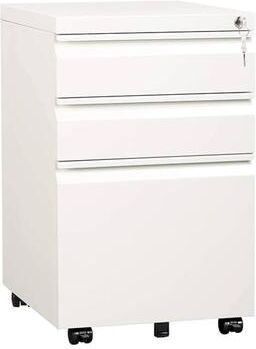
Garvee Document 3-Drawer Mobile Metal Filing Cabinet with Lock, Document Storage Solution, WhiteSpacious 3-Drawer Storage – Deep, roomy drawers hold letter, legal, and A4 documents with adjustable hanging rails. Extra space for office supplies, notebooks, and personal items keeps workspaces neat and productive.129,99 $*Shipping: 0,00 $Secure redirect to the provider
-
Garvee Three-Drawer Metal Filing Storage Cabinet with Lock for Home Office Document Storage, WhiteSecure Locking & Anti-Tilt Design – Reliable locking mechanism secures all drawers for Letter, Legal, A4, and F4 documents. Anti-tilt system locks other drawers when one is fully opened, preventing tipping and ensuring safe use.155,99 $*Shipping: 0,00 $Secure redirect to the provider
-
GDFStudio - Benjamin Metal Folding Storage Cabinet with Secure Locking Doors and Flexible OrganizationSecure Locking Doors: Designed with robust handle locks, this cabinet offers enhanced security to protect valuable documents, tools, or supplies in offices, schools, or garages while remaining easy to operate.211,90 $*Shipping: 0,00 $Secure redirect to the provider
-
VIVIADORE Drawer Lateral Filing Cabinet with Lock,Wide Metal Storage Cabinet with Secure DrawersOptimize your workspace organization with this widened drawer file cabinet, designed to provide efficient storage, easy file management, and enhanced document security.263,50 $*Shipping: 0,00 $Secure redirect to the provider
-
What is the correct conjugation?
The correct conjugation of a verb depends on the subject of the sentence and the tense being used. In English, regular verbs typically follow a pattern of adding -ed to form the past tense (e.g., walk becomes walked). Irregular verbs, on the other hand, have unique conjugations that do not follow a set pattern (e.g., go becomes went). It is important to pay attention to the subject of the sentence and the tense being used in order to correctly conjugate a verb. **
-
What is conjugation in German?
Conjugation in German refers to the process of changing the form of a verb to match the subject of the sentence. This means that the verb will have different endings depending on whether the subject is "I," "you," "he/she/it," "we," or "they." Conjugation is an important aspect of German grammar as it helps to indicate who is performing the action in a sentence. It is essential for learners of German to understand how to conjugate verbs in order to communicate effectively in the language. **
-
What conjugation does "dare" have?
"Dare" is a regular verb in Italian and belongs to the second conjugation. In the present tense, it is conjugated as follows: io do, tu dai, lui/lei dà, noi diamo, voi date, loro danno. **
-
How do I distinguish between the verbs of the E-conjugation and the consonant conjugation?
In Old Norse, the E-conjugation verbs typically end in -a in the infinitive form, while the consonant conjugation verbs end in -a, -i, or -u. Additionally, the E-conjugation verbs have a stem vowel that changes between the present and past tense, while the consonant conjugation verbs have a stem vowel that remains the same. It is also important to note that there are irregular verbs in both conjugations that do not follow these patterns. Therefore, it is important to study and memorize the specific conjugation patterns for each verb. **
Similar search terms for Conjugation
-
OEM Wood File Cabinet, Tall Filing Storage Printer Stand for A4/Letter/Legal Size, Home Office Document Accent CabinetA reliable file cabinet is the backbone of an organized workspace—where documents find their place, clutter fades away, and work flows with ease.238,49 $*Shipping: 0,00 $Secure redirect to the provider
-
KOWO Wooden 2-Drawer Filing Cabinet with Lock Letter Size Office Storage, Locking Document Organizer for Home or WorkplaceAre you always troubled with not being able to find documents and materials and the mess of piles of folders? Do you often need help finding what you want? It's time to have a file cabinet!123,19 $*Shipping: 0,00 $Secure redirect to the provider
-
VIVIADORE Drawer Lateral Filing Cabinet with Lock,Wide Metal Storage Cabinet with Secure DrawersOptimize your workspace organization with this widened drawer file cabinet, designed to provide efficient storage, easy file management, and enhanced document security.261,11 $*Shipping: 0,00 $Secure redirect to the provider
-
VIVIADORE Drawer Lateral Filing Cabinet with Lock,Wide Metal Storage Cabinet with Secure DrawersOptimize your workspace organization with this widened drawer file cabinet, designed to provide efficient storage, easy file management, and enhanced document security.226,92 $*Shipping: 0,00 $Secure redirect to the provider
-
What does the consonantal conjugation mean?
Consonantal conjugation is a grammatical feature found in Semitic languages, where the root of a verb consists of consonants only, and the vowels are added to indicate different tenses, moods, and aspects. This type of conjugation is characterized by changes in the vowels within the root consonants to convey different meanings. Consonantal conjugation allows for a high degree of flexibility and complexity in verb forms, making it a key feature of Semitic language grammar. **
-
What is the conjugation in German?
Conjugation in German refers to changing the form of a verb to match the subject of a sentence. This means adjusting the verb's ending based on the person (I, you, he/she/it, we, you all, they) and tense (present, past, future). German verbs can have different conjugations depending on these factors, making it important to learn the various verb forms to communicate accurately in the language. **
-
Is there a language without conjugation?
Yes, there are languages without conjugation. For example, Chinese is a language that does not have verb conjugation. In Chinese, verbs remain the same regardless of the subject or tense. Instead, time expressions or context are used to indicate when an action took place. **
-
What is the conjugation for French adjectives?
In French, adjectives must agree in gender (masculine/feminine) and number (singular/plural) with the noun they describe. To conjugate an adjective, you add an -e for feminine and an -s for plural. For example, the adjective "petit" (small) would become "petite" in its feminine form and "petits" in its plural form. **
* All prices are inclusive of VAT and, if applicable, plus shipping costs. The offer information is based on the details provided by the respective shop and is updated through automated processes. Real-time updates do not occur, so deviations can occur in individual cases. ** Note: Parts of this content were created by AI.