Buy redfile.eu ?
We are moving the project
redfile.eu .
Are you interested in purchasing the domain
redfile.eu ?
domain@kv-gmbh.de · 0541-91531010
Buy redfile.eu ?
What is reactivity?
Reactivity refers to how likely a substance is to undergo a chemical reaction. Highly reactive substances are more likely to react with other substances, while less reactive substances are more stable and less likely to undergo reactions. Reactivity is influenced by factors such as the arrangement of electrons in an atom or molecule, the presence of functional groups, and the chemical environment in which the substance is placed. Understanding the reactivity of a substance is important in predicting its behavior in various chemical reactions. **
What is reactivity in elimination?
Reactivity in elimination refers to the relative ease with which a particular substrate undergoes elimination reaction. Substrates with more reactive leaving groups or more substituted carbons are generally more reactive in elimination reactions. Reactivity can also be influenced by the nature of the base or catalyst used in the elimination reaction. Understanding the reactivity of a substrate is important for predicting and controlling the outcome of elimination reactions. **

Similar search terms for Reactivity
Top-Angebote
Products related to Reactivity:
-
GDFStudio - Benjamin Metal Folding Storage Cabinet with Secure Locking Doors and Flexible OrganizationSecure Locking Doors: Designed with robust handle locks, this cabinet offers enhanced security to protect valuable documents, tools, or supplies in offices, schools, or garages while remaining easy to operate.211,90 $*Shipping: 0,00 $Secure redirect to the provider
-
VIVIADORE Drawer Lateral Filing Cabinet with Lock,Wide Metal Storage Cabinet with Secure DrawersOptimize your workspace organization with this widened drawer file cabinet, designed to provide efficient storage, easy file management, and enhanced document security.263,50 $*Shipping: 0,00 $Secure redirect to the provider
-
OEM Wood File Cabinet, Tall Filing Storage Printer Stand for A4/Letter/Legal Size, Home Office Document Accent CabinetA reliable file cabinet is the backbone of an organized workspace—where documents find their place, clutter fades away, and work flows with ease.231,34 $*Shipping: 0,00 $Secure redirect to the provider
-
KOWO Wooden 2-Drawer Filing Cabinet with Lock Letter Size Office Storage, Locking Document Organizer for Home or WorkplaceAre you always troubled with not being able to find documents and materials and the mess of piles of folders? Do you often need help finding what you want? It's time to have a file cabinet!123,19 $*Shipping: 0,00 $Secure redirect to the provider


-
What is reactivity in chemistry?
Reactivity in chemistry refers to the tendency of a substance to undergo chemical reactions with other substances. This can be influenced by factors such as the arrangement of electrons in the atoms, the presence of functional groups, and the stability of the resulting products. Highly reactive substances are more likely to participate in chemical reactions, while less reactive substances are more stable and less likely to undergo reactions. Understanding reactivity is important in predicting how substances will behave in various chemical processes and reactions. **
-
Why do alkenes and alkynes have a high reactivity? Why is the reactivity of alkenes greater than that of alkanes and the reactivity of alkynes the greatest?
Alkenes and alkynes have high reactivity due to the presence of pi bonds, which are more easily broken than the sigma bonds found in alkanes. The pi bonds in alkenes and alkynes are more exposed and less stable, making them more susceptible to reactions. The reactivity of alkenes is greater than that of alkanes because they have one or more pi bonds, which provide more opportunities for chemical reactions. Similarly, alkynes have the greatest reactivity because they have two pi bonds, making them even more susceptible to reactions than alkenes. **
-
What is the reactivity of alkenes and alkynes?
Alkenes and alkynes are more reactive than alkanes due to the presence of pi bonds in their structures. The pi bonds allow for the addition of atoms or groups to the carbon-carbon double or triple bond, making them susceptible to various types of reactions such as addition reactions. Alkynes are generally more reactive than alkenes due to the presence of a triple bond, which provides more opportunities for reactions to occur. Overall, the reactivity of alkenes and alkynes makes them important building blocks in organic chemistry for synthesizing a wide range of compounds. **
-
What is the reactivity of the main groups?
The reactivity of the main groups in the periodic table varies depending on the specific group. Generally, the alkali metals in Group 1 are highly reactive, readily forming ionic compounds with nonmetals. The alkaline earth metals in Group 2 are also reactive, but less so than the alkali metals. The halogens in Group 17 are highly reactive nonmetals, readily forming compounds with metals. The noble gases in Group 18 are generally unreactive due to their full outer electron shells. Overall, reactivity tends to increase going down a group and decrease going across a period from left to right. **


What is the reactivity of alkanes and alkenes?
Alkanes are relatively unreactive due to the presence of only single bonds between carbon atoms, which makes them stable and inert under most conditions. On the other hand, alkenes are more reactive than alkanes due to the presence of a double bond, which can undergo addition reactions with various reagents. This double bond provides alkenes with the ability to participate in a wide range of chemical reactions, making them more versatile in organic synthesis compared to alkanes. **
What is the reactivity series of metals in chemistry?
The reactivity series of metals is a list of metals arranged in order of their reactivity, from the most reactive to the least reactive. This series helps predict how metals will react with other substances, such as acids or water. Metals higher in the reactivity series will displace metals lower in the series from their compounds in reactions. The reactivity series is a fundamental concept in chemistry that helps understand the behavior of metals in various chemical reactions. **
Top-Angebote
Products related to Reactivity:
-
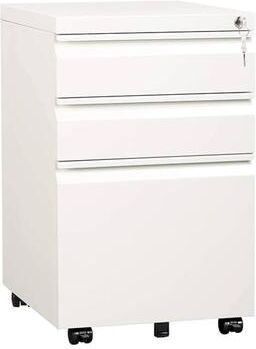
Garvee Document 3-Drawer Mobile Metal Filing Cabinet with Lock, Document Storage Solution, WhiteSpacious 3-Drawer Storage – Deep, roomy drawers hold letter, legal, and A4 documents with adjustable hanging rails. Extra space for office supplies, notebooks, and personal items keeps workspaces neat and productive.129,99 $*Shipping: 0,00 $Secure redirect to the provider
-
Garvee Three-Drawer Metal Filing Storage Cabinet with Lock for Home Office Document Storage, WhiteSecure Locking & Anti-Tilt Design – Reliable locking mechanism secures all drawers for Letter, Legal, A4, and F4 documents. Anti-tilt system locks other drawers when one is fully opened, preventing tipping and ensuring safe use.155,99 $*Shipping: 0,00 $Secure redirect to the provider
-
GDFStudio - Benjamin Metal Folding Storage Cabinet with Secure Locking Doors and Flexible OrganizationSecure Locking Doors: Designed with robust handle locks, this cabinet offers enhanced security to protect valuable documents, tools, or supplies in offices, schools, or garages while remaining easy to operate.211,90 $*Shipping: 0,00 $Secure redirect to the provider
-
VIVIADORE Drawer Lateral Filing Cabinet with Lock,Wide Metal Storage Cabinet with Secure DrawersOptimize your workspace organization with this widened drawer file cabinet, designed to provide efficient storage, easy file management, and enhanced document security.263,50 $*Shipping: 0,00 $Secure redirect to the provider
-
What is reactivity?
Reactivity refers to how likely a substance is to undergo a chemical reaction. Highly reactive substances are more likely to react with other substances, while less reactive substances are more stable and less likely to undergo reactions. Reactivity is influenced by factors such as the arrangement of electrons in an atom or molecule, the presence of functional groups, and the chemical environment in which the substance is placed. Understanding the reactivity of a substance is important in predicting its behavior in various chemical reactions. **
-
What is reactivity in elimination?
Reactivity in elimination refers to the relative ease with which a particular substrate undergoes elimination reaction. Substrates with more reactive leaving groups or more substituted carbons are generally more reactive in elimination reactions. Reactivity can also be influenced by the nature of the base or catalyst used in the elimination reaction. Understanding the reactivity of a substrate is important for predicting and controlling the outcome of elimination reactions. **
-
What is reactivity in chemistry?
Reactivity in chemistry refers to the tendency of a substance to undergo chemical reactions with other substances. This can be influenced by factors such as the arrangement of electrons in the atoms, the presence of functional groups, and the stability of the resulting products. Highly reactive substances are more likely to participate in chemical reactions, while less reactive substances are more stable and less likely to undergo reactions. Understanding reactivity is important in predicting how substances will behave in various chemical processes and reactions. **
-
Why do alkenes and alkynes have a high reactivity? Why is the reactivity of alkenes greater than that of alkanes and the reactivity of alkynes the greatest?
Alkenes and alkynes have high reactivity due to the presence of pi bonds, which are more easily broken than the sigma bonds found in alkanes. The pi bonds in alkenes and alkynes are more exposed and less stable, making them more susceptible to reactions. The reactivity of alkenes is greater than that of alkanes because they have one or more pi bonds, which provide more opportunities for chemical reactions. Similarly, alkynes have the greatest reactivity because they have two pi bonds, making them even more susceptible to reactions than alkenes. **
Similar search terms for Reactivity
-
OEM Wood File Cabinet, Tall Filing Storage Printer Stand for A4/Letter/Legal Size, Home Office Document Accent CabinetA reliable file cabinet is the backbone of an organized workspace—where documents find their place, clutter fades away, and work flows with ease.231,34 $*Shipping: 0,00 $Secure redirect to the provider
-
KOWO Wooden 2-Drawer Filing Cabinet with Lock Letter Size Office Storage, Locking Document Organizer for Home or WorkplaceAre you always troubled with not being able to find documents and materials and the mess of piles of folders? Do you often need help finding what you want? It's time to have a file cabinet!123,19 $*Shipping: 0,00 $Secure redirect to the provider
-
VIVIADORE Drawer Lateral Filing Cabinet with Lock,Wide Metal Storage Cabinet with Secure DrawersOptimize your workspace organization with this widened drawer file cabinet, designed to provide efficient storage, easy file management, and enhanced document security.261,11 $*Shipping: 0,00 $Secure redirect to the provider
-
VIVIADORE Drawer Lateral Filing Cabinet with Lock,Wide Metal Storage Cabinet with Secure DrawersOptimize your workspace organization with this widened drawer file cabinet, designed to provide efficient storage, easy file management, and enhanced document security.226,92 $*Shipping: 0,00 $Secure redirect to the provider
-
What is the reactivity of alkenes and alkynes?
Alkenes and alkynes are more reactive than alkanes due to the presence of pi bonds in their structures. The pi bonds allow for the addition of atoms or groups to the carbon-carbon double or triple bond, making them susceptible to various types of reactions such as addition reactions. Alkynes are generally more reactive than alkenes due to the presence of a triple bond, which provides more opportunities for reactions to occur. Overall, the reactivity of alkenes and alkynes makes them important building blocks in organic chemistry for synthesizing a wide range of compounds. **
-
What is the reactivity of the main groups?
The reactivity of the main groups in the periodic table varies depending on the specific group. Generally, the alkali metals in Group 1 are highly reactive, readily forming ionic compounds with nonmetals. The alkaline earth metals in Group 2 are also reactive, but less so than the alkali metals. The halogens in Group 17 are highly reactive nonmetals, readily forming compounds with metals. The noble gases in Group 18 are generally unreactive due to their full outer electron shells. Overall, reactivity tends to increase going down a group and decrease going across a period from left to right. **
-
What is the reactivity of alkanes and alkenes?
Alkanes are relatively unreactive due to the presence of only single bonds between carbon atoms, which makes them stable and inert under most conditions. On the other hand, alkenes are more reactive than alkanes due to the presence of a double bond, which can undergo addition reactions with various reagents. This double bond provides alkenes with the ability to participate in a wide range of chemical reactions, making them more versatile in organic synthesis compared to alkanes. **
-
What is the reactivity series of metals in chemistry?
The reactivity series of metals is a list of metals arranged in order of their reactivity, from the most reactive to the least reactive. This series helps predict how metals will react with other substances, such as acids or water. Metals higher in the reactivity series will displace metals lower in the series from their compounds in reactions. The reactivity series is a fundamental concept in chemistry that helps understand the behavior of metals in various chemical reactions. **
* All prices are inclusive of VAT and, if applicable, plus shipping costs. The offer information is based on the details provided by the respective shop and is updated through automated processes. Real-time updates do not occur, so deviations can occur in individual cases. ** Note: Parts of this content were created by AI.